
+91 9908011552
dr_asok2003@yahoo.com
+91 9908011552
LoginOrder HistoryLogout
My Account
Facebook
YouTube
anti-climax-logo
  • Home
  • About Us
  • Sexual Dysfunctions
    • Male Issues
      • Sexual Desire/Libido
      • Erectile Dysfunction
      • Premature Ejaculation
      • Difficulties with Orgasm
      • Other Age Related Issues
    • Female Issues
  • Products
    • For Male
    • For Female
  • Blog
  • Our You tube Channel
  • Contact Us
Product was added to your cart

Cart

Erectile Dysfunction

Home Erectile Dysfunction
Erectile dysfunction (ED) or impotence is sexual dysfunction characterized by the inability to develop or maintain an erection of the penis during sexual performance.

A penile erection is the hydraulic effect of blood entering and being retained in sponge-like bodies within the penis. The process is often initiated as a result of sexual arousal, when signals are transmitted from the brain to nerves in the penis. The most important organic causes are cardiovasculardisease and diabetes, neurological problems (for example, trauma from prostatectomy surgery), hormonal insufficiencies (hypogonadism) and drug side effects.

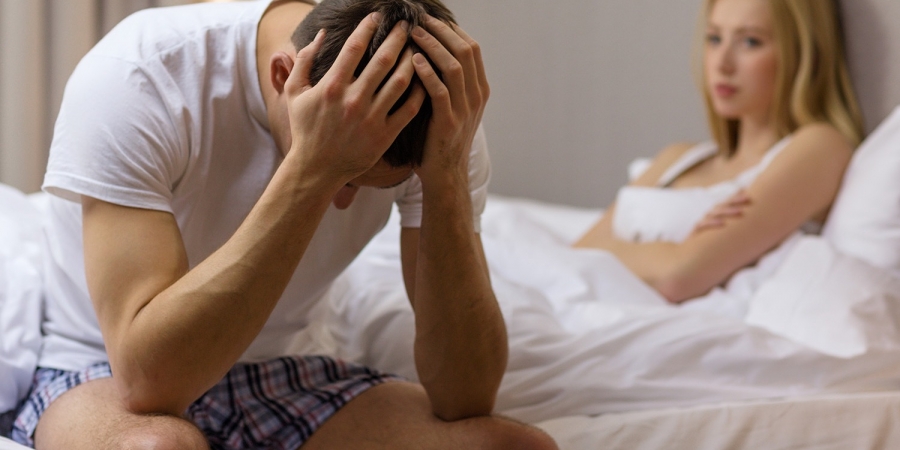
Psychological impotence is where erection or penetration fails due to thoughts or feelings (psychological reasons) rather than physical impossibility; this is somewhat less frequent but often can be helped. Notably in psychological impotence, there is a strong response to placebo treatment. Erectile dysfunction, can have severe psychological consequences as it can be tied to relationship difficulties and masculine self image generally .
Sexual Desire/Libido

The Latin term impotentia coeundi describes simple inability to insert the penis into the vagina. It is now mostly replaced by more precise terms.The study of erectile dysfunction within medicine is covered by andrology, a sub-field within urology.

SIGNS AND SYMPTOMS

Erectile dysfunction is characterized by the regular or repeated inability to obtain or maintain an erection. It is analyzed in several ways:

  • Obtaining full erections at some times, such as when asleep (when the mind and psychological issues, if any, are less present), tends to suggest that the physical structures are functionally working.
  • Other factors leading to erectile dysfunction are diabetes mellitus (causing neuropathy).

CAUSES

  • Drugs (anti-depressants (SSRIs) and nicotine are most common)
  • Neurogenic disorders
  • Cavernosal disorders (Peyronie’s disease)
  • Psychological causes: performance anxiety, stress, mental disorders, psychological problems, negative feelings.
  • Surgery
  • Aging. It is four times higher in men in their 60s than in men in their 40s.
  • Kidney failure
  • Diseases such as diabetes and multiple sclerosis (MS). While these two causes have not been proven they’re likely suspects as they cause issues with both the blood flow and nervous systems.
  • At least one paper has suggested that arsenic poisoning from contaminated well water may be a cause in some regions, perhaps by alteration of voltage gated potassium channels.
  • Lifestyle: smoking is a key cause of erectile dysfunction. Smoking causes impotence because it promotes arterial narrowing. See also Tobacco and health.

Surgical intervention for a number of conditions may remove anatomical structures necessary to erection, damage nerves, or impair blood supply. Erectile dysfunction is a common complication of treatments for prostate cancer, including prostatectomy and destruction of the prostate by external beam radiation, although the prostate gland itself is not necessary to achieve erection.

ED can also be associated with bicycling due to both neurological and vascular problems due to compression. The increase risk appears to be about 1.7 fold.

A recent study suggests an epidemiological association between chronic periodontitis (periodontal inflammation) and erectile dysfunction, similarly to the association between periodontitis andcoronary heart diseases, and cerebrovascular diseases. In all the three conditions (erectile dysfunction, coronary heart disease and cerebrovascular diseases), despite the epidemiological association with periodontitis, no causative connection has yet been proven.

Some blood tests are generally done to exclude underlying disease, such as hypogonadism and prolactinoma. Diabetes is considered a disorder, but is also a risk. Impotence is also related to generally poor physical health, poor dietary habits, obesity, and most specifically cardiovascular disease such as coronary artery diseaseand peripheral vascular disease.

A useful and simple way to distinguish between physiological and psychological impotence is to determine whether the patient ever has an erection. If never, the problem is likely to be physiological; if sometimes (however rarely), it could be physiological or psychological. The current diagnostic and statistical manual of mental diseases (DSM-IV) has included a listing for impotence.

Duplex ultrasound
Duplex ultrasound is used to evaluate blood flow, venous leak, signs of atherosclerosis, and scarring or calcification of erectile tissue. Injecting prostaglandin, a hormone-like stimulator produced in the body, induces erection. Ultrasound is then used to see vascular dilation and measure penile blood pressure.
Penile nerves function
Tests such as the bulbocavernosus reflex test are used to determine if there is sufficient nerve sensation in the penis. The physician squeezes the glans (head) of the penis, which immediately causes the anus to contract if nerve function is normal. A physician measures the latency between squeeze and contraction by observing the anal sphincter or by feeling it with a gloved finger inserted past the anus.
Nocturnal penile tumescence (NPT)
It is normal for a man to have five to six erections during sleep, especially during rapid eye movement (REM). Their absence may indicate a problem with nerve function or blood supply in the penis. There are two methods for measuring changes in penile rigidity and circumference during nocturnal erection: snap gauge and strain gauge. A significant proportion of men who have no sexual dysfunction nonetheless do not have regular nocturnal erections.
Penile biothesiometry
This test uses electromagnetic vibration to evaluate sensitivity and nerve function in the glans and shaft of the penis.
Dynamic infusion cavernosometry (DICC)
technique in which fluid is pumped into the penis at a known rate and pressure. It gives a measurement of the vascular pressure in the corpus cavernosum during an erection.
Corpus cavernosometry
Cavernosography measurement of the vascular pressure in the corpus cavernosum. Saline is infused under pressure into the corpus cavernosum with a butterfly needle, and the flow rate needed to maintain an erection indicates the degree of venous leakage. The leaking veins responsible may be visualised by infusing a mixture of saline and x ray contrast medium and performing a cavernosogram.; Digital Subtraction Angiography: In DSA, the images are acquired digitally.

Quick Links

  • Home
  • Shop Now
  • Login
  • My Account
  • Contact Us

Help

  • Terms & Conditions
  • Replacement Gurantee
  • Cancellation & Refund
  • Returns and Exchanges
  • Shipping and Delivery

Contacts Us

DR ASHOK KUMAR , M.S (sexologist)
International Center of Sexology Research &
Development, Gudivada Road, Hanuman Junction,
Krishna District, Andhra Pradesh India – 521105
+91 9908011552
info@anticlimax.in

Login / Logout

Log Out
RegisterLost Password
© Copyright 2017 - Anti Climax